Why Are Composite Toe Boots Better for Winter?

Time:2026-11-22 Author:Henry
0%

Cold mornings change how work boots feel. A steel toe can draw warmth from the foot when temperatures drop, especially during long periods outdoors. Composite toe caps use nonmetal materials, which generally transfer less cold from the outside. That difference can make a noticeable difference while standing on a frosty loading dock or walking across a snow-dusted jobsite. That matters.

The question “why are composite toe boots better for winter” has a practical answer, but it needs some context. Their nonmetal construction may feel less cold, and many models are lighter than comparable steel-toe boots. Composite materials also do not conduct heat as readily as steel. Still, the toe cap alone cannot keep feet warm. Insulation, waterproofing, sock choice, fit, and time spent in wet conditions all play important roles. A boot that is too tight may leave little room for warm socks, while a poorly sealed upper can let slush in quickly.

Safety comes first. Check that a boot meets the protective requirements for your workplace, because ratings and features vary by model and region. Composite toes may also be bulkier, and they are not automatically the best choice for every task. Not always. This guide looks at winter comfort, protection, weight, and practical trade-offs, so readers can compare specific boots rather than rely on a simple material claim. The details matter more than the label.
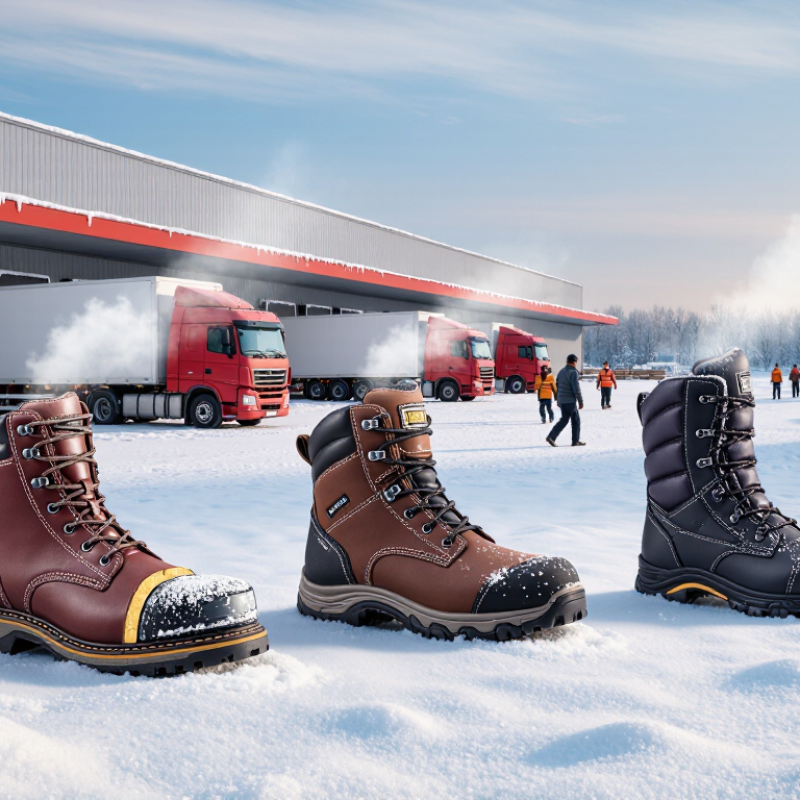
Why Are Composite Toe Boots Better for Winter?

Composite Toe Caps and ASTM F2413’s 75 ft·lbf Impact-Test Requirement

Composite toe boots can suit winter work because their toe caps are nonmetallic and generally conduct less heat than steel. But warmth depends on the entire boot: insulation, lining, fit, and a dry sock matter too. It is easy to overrate the cap material; it is only one part of the boot.

ASTM F2413 sets performance requirements for protective footwear. Its I/75 impact classification means the toe cap is tested against an impact energy of 75 ft·lbf, about 102 joules. That is a demanding, measurable test—not a guarantee against every falling object or crushing hazard. OSHA’s cold-stress guidance also emphasizes that wet clothing and wind increase heat loss, so a certified toe cap alone cannot keep feet warm. Small details matter. A boot that fits too tightly can leave less room for warm air and thick socks.

Tips: Check the boot’s ASTM marking for I/75, then match the full boot to your task and winter conditions. Try it on with your work socks. Leave toe room, keep socks dry, and replace boots with damaged uppers or soles. If your feet still feel cold, the insulation or fit may be the weak point.

How Nonmetallic Toe Caps Transfer Heat Differently Than Steel

On a cold site, the toe of a boot can feel chilly before the rest of the foot does. Steel conducts heat relatively well, so warmth from the toe area can pass through the cap and outward into colder surroundings. The effect depends on conditions, though. A brief walk across dry pavement is not the same as standing still on frozen ground for hours.

Composite toe caps use nonmetallic materials, which generally conduct less heat than steel. That slower heat transfer may help the toe area feel less cold in winter. Less heat transfer, not no heat transfer. Cold can still enter through the sole, upper, wet socks, or gaps around a poor fit. The cap alone cannot keep feet warm.

Boot construction matters. Insulation, a moisture-managing lining, and a sole suited to cold surfaces all affect comfort. Check that the boot meets the required impact and compression standards for your work; a warmer-feeling cap is not a substitute for certified protection. One detail is easy to overlook: thick socks can make a boot tight, and tightness may reduce comfort during a long shift. Try the boots with your usual work socks and leave enough room to wiggle your toes.

Boot Weight and Winter Mobility: Compare Manufacturer Specifications

When comparing winter boots, check the stated weight for the same size and unit: per boot or per pair. A lighter composite toe may help, but insulation, waterproof layers, and a thick outsole can erase that difference. Read the full specification. Then compare the same features across models, including safety-toe rating and sole construction. A weight figure without a size is less useful than it looks.

Weight matters over a long shift. Frederick and colleagues’ 1984 study in Medicine & Science in Sports & Exercise found that adding 100 grams to each running shoe increased the energy cost of running by roughly 1%. That was a controlled running study, not a winter-boot trial, so treat it as context, not a direct prediction. On packed snow, extra bulk can also make quick steps feel clumsy. Not always. Check whether the manufacturer lists weight for a single boot, and whether the listed sample includes insulation. I would compare two pairs in person if possible; published figures do not reveal how a boot flexes when you step around slush or climb a cold metal stair.

ASTM F2413’s 2,500-lb Compression-Test Requirement for Protective Toes

Why Are Composite Toe Boots Better for Winter?

ASTM F2413’s 2,500-lb Compression-Test Requirement for Protective Toes

Winter work brings more than icy ground. Cold air can make metal toe caps feel especially chilly, while snow and slush add discomfort. Composite toe caps are made from nonmetallic materials, which generally transfer less cold than steel. That can help keep toes more comfortable. It is not a substitute for warm socks or insulated footwear.

ASTM F2413 sets performance requirements for protective-toe footwear. In the compression test, a toe cap must withstand a controlled load of at least 2,500 pounds while preserving required clearance for the toes. The number describes a laboratory test, not a promise that a boot will protect against every real-world crushing hazard. Impacts, wear, fit, and the shape of an object all matter. Easy to overlook.

A composite cap can also be lighter and may not trigger some metal detectors. But winter performance depends on the whole boot: insulation, waterproofing, sole grip, and a secure fit matter just as much. A roomy toe box is useful when wearing thicker socks, though too much space can let feet slide. Check the footwear’s markings and care instructions, and replace it if the toe area is damaged. The standard helps set a baseline; it cannot assess every jobsite.

Choosing Winter Boots: Insulation, Waterproofing, and ASTM F2913 Slip Testing

Composite toe boots can be a practical winter choice because nonmetallic toe caps generally transfer less cold than steel. That difference helps, but it cannot replace proper insulation. Match the lining to your work pace: heavy insulation may feel warm while standing, then leave damp socks during brisk activity. Fit matters. Leave room for thicker socks without letting your heel lift or toes press against the cap.

Waterproofing deserves equal attention. Look for sealed seams, a gusseted tongue, and materials that keep slush out while allowing some moisture to escape. After a wet shift, remove the insoles and let the boots dry fully. A boot that stays damp can feel cold even with a thick lining. Check the outsole, too. Deep, flexible lugs may grip packed snow better than a smooth, hardened sole, but tread patterns do not make every surface safe.

ASTM F2913 is a test method for measuring footwear slip resistance under controlled conditions. It can help compare results, but test conditions may not match the mix of slush, oil, and polished floors at your job. Ice is different. Ask what surfaces and contaminants were used in testing, and treat any rating as one piece of evidence, not a guarantee. Even good boots need careful steps on changing winter ground.

Why Are Composite Toe Boots Better for Winter? - Choosing Winter Boots: Insulation, Waterproofing, and ASTM F2913 Slip Testing
Winter-Boot Factor Composite Toe Boots Steel Toe Boots What to Check When Choosing
Toe-cap material Use nonmetallic protective toe caps, commonly made from materials such as fiberglass or other composites. Use a protective toe cap made of steel. Check the boot’s safety-toe certification and select a toe-cap type that meets your workplace requirements.
Cold transfer at the toe Composite materials generally conduct heat less readily than steel, which may help reduce heat loss through the toe cap. Steel conducts heat more readily than composite materials, so the toe area may feel colder in low temperatures. Toe-cap material is only one factor. Insulation, socks, fit, activity level, and exposure time also affect warmth.
Insulation and warmth A composite toe does not, by itself, make a boot insulated or suitable for a particular temperature. A steel toe does not, by itself, determine the boot’s insulation or temperature suitability. Look for the boot maker’s insulation details and any stated temperature guidance. There is no single insulation rating system shared by all work boots.
Weight Composite toe caps are often lighter than comparable steel caps, although overall boot weight varies by design and size. Steel toe caps can add weight, but the total difference depends on the boot’s construction. Compare the listed weight for the same size where available, and try the boots on with your usual winter socks.
Waterproofing Composite toe construction does not make a boot waterproof. Steel toe construction does not make a boot waterproof. Check for a stated waterproof construction, sealed seams, and suitable upper materials. Waterproof protection and insulation are separate features.
Fit with winter socks A roomy, secure fit helps accommodate thicker socks without excessive pressure on the toes. A roomy, secure fit helps accommodate thicker socks without excessive pressure on the toes. Try boots on with the socks you plan to wear. Tight footwear can reduce comfort and leave less room for warm air around the foot.
Slip resistance and ASTM F2913 Toe-cap material does not determine outsole traction. Toe-cap material does not determine outsole traction. ASTM F2913 is a test method for measuring footwear slip resistance on specified surfaces and under specified conditions. Check test information for the exact boot and remember that ice, snow, contaminants, and wear can change real-world traction.
Best winter-buying approach A useful option when reducing cold transfer at the toe or choosing a nonmetallic toe cap is important. A useful option when a steel toe is required or preferred for the job. Choose by the complete boot: required safety protection, insulation, waterproofing, fit, outsole traction, and the conditions of your work.

FAQS

Why can composite toe caps feel less cold than steel?

Nonmetallic materials generally transfer heat more slowly than steel. That can help on a cold shift. It is not insulation.

Will a composite toe cap keep my feet warm by itself?

No. Cold can still enter through the sole, wet socks, or gaps around a poor fit. The cap alone cannot do it.

What boot details matter for winter comfort?

Check the insulation, lining, and sole, not just the toe cap. A dry, well-fitting boot matters too.

How should I choose insulation for my work pace?

Heavy insulation may feel warm while standing still. During brisk work, it might leave socks damp. That trade-off is easy to miss.

How should winter boots fit with thick work socks?

Try them with your usual socks. Your toes should have room to wiggle, but your heel should not lift. Tight boots can feel worse over a long shift.

What waterproof features should I look for?

Sealed seams and a gusseted tongue can help keep slush out. Materials that release some moisture may also help. No boot stays comfortable when it remains wet.

How should I dry boots after a wet shift?

Remove the insoles and let the boots dry fully. Damp boots can feel cold, even with thick lining. Small step, noticeable difference.

What does ASTM F2913 tell me about slip resistance?

It measures footwear slip resistance under controlled conditions. Ask which surfaces and contaminants were tested. A result can help compare boots, but it cannot guarantee grip on changing ice or slush.

Conclusion

Why are composite toe boots better for winter? Their nonmetallic toe caps generally transfer heat less readily than steel, which can help feet feel less cold in low temperatures, although insulation, socks, and fit also matter. Composite toes can also reduce boot weight; comparing manufacturer specifications for complete boots can show whether that difference may improve comfort and mobility during long shifts. Lighter construction does not replace protective performance: ASTM F2413 includes a 75 ft·lbf impact-test requirement and a 2,500-lb compression-test requirement for protective toes.

For winter work, choose boots by considering the whole package, not just the toe material. Look for suitable insulation and waterproofing, and check whether slip resistance has been evaluated using ASTM F2913, a test method for measuring footwear’s resistance to slipping. Together, these features can help balance warmth, protection, traction, and comfort in cold-weather conditions.

Henry

Henry

Henry is a dedicated marketing professional with a profound expertise in the company's offerings. With years of experience in the industry, he possesses an impressive understanding of the market dynamics and consumer behaviors that drive success. Henry is committed to sharing his insights through......