How to Break In Steel Toe Boots Fast?

Time:2026-10-09 Author:Amelia
0%

Learning how to break in steel toe boots fast should never mean tolerating sharp pain. A proper break-in process improves flexibility while protecting your heels, toes, and arches. Dr. Paul Langer, a podiatrist and footwear specialist, puts the principle clearly: “A good break-in should reduce stiffness, not create injury.” That idea matters when a rigid toe cap presses against your toes or a rough heel counter rubs your skin.

Start with clean, dry socks and wear the boots indoors for 20 to 30 minutes. Walk across hard floors, climb a few stairs, and notice pressure points. Your feet provide useful evidence. If your toes touch the steel cap, stop. The boots may be too short, not simply unbroken-in. Never depend on painful walking to solve poor sizing.

A thin layer of boot conditioner can soften leather around the ankle and flex zones. Avoid soaking the boots or applying direct heat. Water may distort the shape, while a heater can crack leather and weaken adhesives. After each short session, loosen the laces and let the boots rest overnight. Add cushioned insoles only after confirming the original fit. Extra volume can make tight boots worse.

Some discomfort is normal. Burning, numbness, blisters, or swelling is not. I have found that gradual wear works better than one exhausting day. Still, this method is not perfect. Leather, toe-box shape, and foot structure differ widely. If pain continues after several brief sessions, return the boots or seek professional fitting advice. Fast should mean efficient, not reckless.
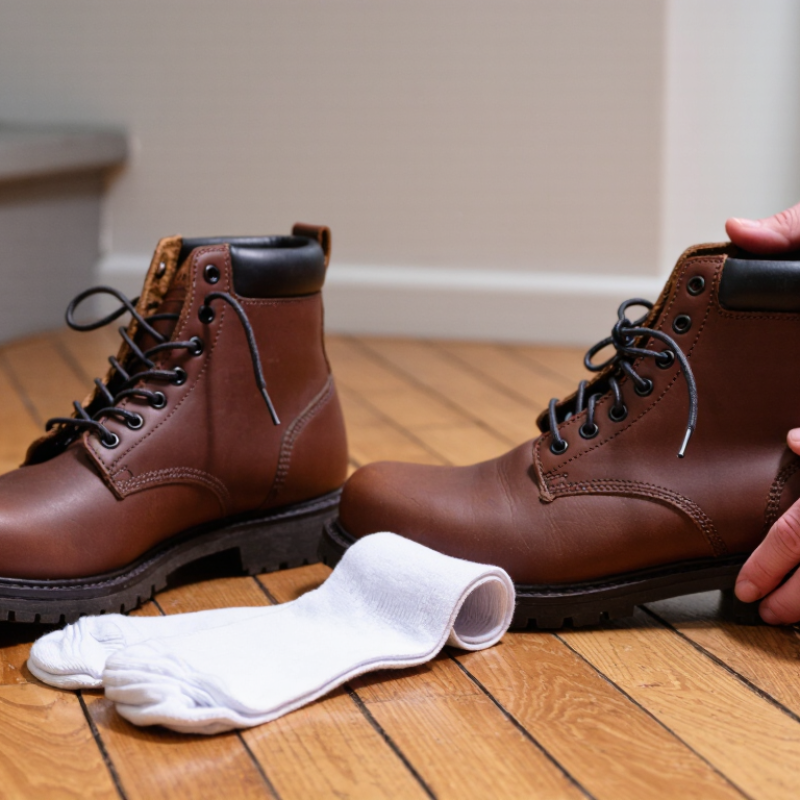
How to Break In Steel Toe Boots Fast?

Choose the Right Fit Before Breaking In Steel Toe Boots

Breaking in steel toe boots fast starts with choosing the right fit, not forcing a poor one. The toe cap should not touch your toes when you stand or walk downhill. Wiggle each toe. Your heel should stay mostly in place, with only slight movement during the first few wears. Measure both feet late in the day, when swelling is more likely. Wear the work socks you normally use.

Small details matter.

I once bought a pair that felt snug across the forefoot, expecting the leather to stretch. It did not solve the pressure from the steel cap, and my little toe became numb after two hours. That mistake changed my fitting routine. Check the widest part of your foot against the boot’s broadest area. Leave roughly a thumb’s width in front of your longest toe. Do not size up excessively; extra space can make your foot slide and create blisters.

Walk indoors on a clean floor for ten minutes, then inspect hot spots on your heel, arch, and toes. If pain appears quickly, reconsider the boot’s size or shape instead of adding thicker socks. Gradually increase wear time, using short shifts before a full workday. A flexible upper may soften, but the protective toe structure will not reshape safely. I still recheck the fit after a week, because swelling, socks, and insoles can change the feel. Comfort is useful evidence, not a guarantee. For demanding work, follow the boot’s safety instructions and workplace requirements.

Prepare the Boots and Your Feet for the Break-In Process

Before wearing steel toe boots for a full shift, inspect every part carefully. Run your fingers along the lining, tongue, and seams. Check that the toe cap does not press against your toes. Remove rough packaging threads or sharp edges. Small defects matter. Loosen the laces completely, then place your foot inside and adjust them gradually. The boot should feel firm, not painfully tight.

Your feet need preparation too. Trim your toenails straight across, and wear the same work socks used on the job. Thick, moisture-wicking socks can reduce rubbing and heat. Apply blister tape to known hot spots before irritation begins. Do not cover broken skin without proper care. Keep your feet dry, and change socks if they become damp. This detail is easy to ignore.

Wear the boots indoors for 20 to 30 minutes. Walk, climb a few stairs, and bend your ankles. Short sessions work. I once skipped this step and developed a painful heel rub before lunch. That was a mistake. Increase wearing time slowly over several days. Check your skin after each session for redness, pressure marks, or swelling. Loosen the laces if your instep feels compressed. Stop using the boots if you notice persistent numbness or sharp pain, then reassess the size, fit, and footbed.

Wear Steel Toe Boots Gradually Around the House

How to Break In Steel Toe Boots Fast?

Wear steel toe boots gradually around the house before taking them outdoors. Start with 20 to 30 minutes on clean, dry floors. Walk, stand, and climb a few stairs. This reveals pressure points early. Wear the same work socks you normally use. Thick socks can change the fit noticeably. Loosen the laces across the toes, then secure the ankle firmly. Your heel should stay mostly in place. The toe box should not squeeze or touch your toes.

Tips: Check your feet after each session. Look for redness, warmth, or rubbing. Stop when discomfort becomes sharp. A short break helps more than forcing another hour. You can also flex the boots gently by hand, but avoid soaking or heating them. Excess moisture and heat may damage materials or weaken adhesives. Apply a small protective pad only after confirming the boot size is correct.

Continue with short household sessions over several days. Add light indoor chores before wearing the boots for a full shift. Steel toe footwear often feels stiff at first, especially around the instep. However, serious pain is not a normal part of breaking in. A boot that causes numbness or persistent blisters may simply fit poorly. This is an easy mistake to make. Gradual wear softens movement, but it cannot correct the wrong shape or size.

Use Safe Methods to Soften Stiff Leather and Pressure Points

How to Break In Steel Toe Boots Fast?

Steel toe boots should soften gradually, not through extreme heat or soaking. Heat can dry leather, weaken adhesives, and distort the toe structure. Start by wearing clean, moisture-wicking socks indoors for 20 to 30 minutes. Walk on a carpeted surface and notice pressure near the heel, tongue, and toe cap. I once ignored a tight instep, and the rubbing became a painful blister. That mistake was avoidable.

The U.S. Bureau of Labor Statistics reported 211,640 workplace injuries involving falls, slips, and trips in 2022. Proper fit and stable traction matter beyond comfort. Loosen the laces over pressure points, but keep the heel secure. A leather conditioner may soften stiff areas, though it cannot create extra toe space. Steel toe caps do not stretch safely. If your toes touch the cap, choose another size or shape.

Tips: Wear the boots briefly each day. Bend the soles gently by hand. Use blister pads before irritation begins. Never use a hair dryer, oven, or boiling water. Check your feet afterward for redness, numbness, or broken skin. Stop wearing the boots if pain remains. OSHA also emphasizes suitable protective footwear for workplace hazards, but I would still question any boot that feels “almost right.” Almost right can become unsafe during a long shift.

How to Break In Steel Toe Boots Fast? - Use Safe Methods to Soften Stiff Leather and Pressure Points

Method Best For Typical Time How to Use It Safely Expected Result Safety Level
Short Indoor Wear General stiffness and mild heel movement 30–60 minutes per session Wear clean, moisture-wicking socks indoors. Increase the session length only when there is no persistent rubbing or numbness. Gradual softening and improved foot adaptation High
Thick Moisture-Wicking Socks Heel slip, ankle rubbing, and minor pressure points Immediately during wear Choose socks that fit without creating tightness inside the boot. Avoid cotton socks if perspiration causes dampness and friction. Less friction and better moisture control High
Targeted Leather Conditioner Stiff leather around the ankle, vamp, or flex areas Several hours to 1–2 days Apply a small amount to compatible smooth leather, focusing on flex points. Test first on a hidden area and follow the care instructions. More flexible leather with reduced surface dryness High
Boot Stretcher or Pressure Tool Localized tightness at the toe box or side of the foot 6–12 hours per treatment Use gradual pressure and check the fit after each treatment. Do not attempt to enlarge the area around the protective toe cap. Small, controlled relief in stretchable leather areas Moderate
Heel-Lock Lacing Heel lift and rubbing at the back of the boot Each wear session Use the upper eyelets to secure the heel without overtightening the instep. Toes should be able to move freely. Reduced heel movement and friction High
Moleskin or Gel Padding A specific hot spot on the heel, ankle, or toe Immediate protection Apply padding to clean, dry skin around—not directly over—an open blister. Remove it if it causes additional pressure or skin irritation. Lower friction while the leather adapts High
Flexible Boot Trees Maintaining shape between wear sessions Overnight or between uses Insert a properly sized tree without forcing the boot wider than its natural shape. Let damp boots air-dry before storage. More consistent shape and fewer creases High
Professional Stretching Persistent pressure points or difficult-to-reach areas Usually 1–3 days Use a qualified footwear repair professional, especially when the boot has rigid safety components or specialized construction. More precise fit adjustment with lower risk of damage High
Important fit and safety checks: Stop wearing the boots if you experience numbness, persistent pain, skin damage, or restricted toe movement. Never use boiling water, direct high heat, a clothes dryer, or aggressive soaking to soften leather. The protective toe cap should not be stretched, heated, or modified.

Test Comfort, Support, and Safety Before Full-Day Wear

How to Break In Steel Toe Boots Fast?

Test your boots indoors before taking them to a full shift. Wear the same work socks you normally use. Check that your toes can move without touching the steel cap. Your heel may lift slightly, but excessive movement signals poor fit. Walk on tile, carpet, and stairs for ten minutes. Notice pressure, rubbing, and balance.

Keep it gradual. Wear the boots for one or two hours, then increase the time daily. Loosen the laces across the forefoot if your toes feel crowded. Tighten them around the ankle for better support. Do not heat, soak, or cut the boots. Those shortcuts can weaken adhesives, leather, or protective components.

A stiff boot is normal at first. Sharp pain is not.

Test workplace safety before a full-day wear. Stand, squat, climb a step, and kneel carefully. Check whether the toe area restricts movement. Look at the outsole for stable traction on dry and slightly damp surfaces. Inspect seams and the toe cap after each trial. My first fitting mistake was trusting comfort while standing still. Movement revealed a hot spot near the heel. If numbness, blisters, or lasting pain appears, stop the break-in process. The size or shape may be wrong.

Break-in cannot correct an unsuitable boot.

FAQS

How should I inspect steel toe boots before wearing them?

Check the lining, tongue, seams, toe cap, and inner edges. Remove loose threads or sharp packaging pieces. Small defects can cause painful rubbing.

How should my feet be prepared for the break-in period?

Trim toenails straight across. Wear your usual work socks. Thick moisture-wicking socks can reduce heat and friction. Keep your feet dry.

How long should I wear new boots indoors at first?

Start with 20 to 30 minutes on clean, dry floors. Walk, stand, climb stairs, and bend your ankles. Short sessions reveal pressure points early.

How can I reduce pressure around the instep and heel?

Loosen the laces across tight areas. Keep the ankle secure. Your heel should remain mostly stable. Adjust gradually, not aggressively.

What signs show that the boots fit poorly?

Watch for numbness, sharp pain, swelling, persistent blisters, or toes touching the toe cap. These problems are not normal break-in discomfort.

Can heat or soaking soften stiff leather safely?

Avoid hair dryers, ovens, boiling water, and soaking. Heat can weaken adhesives and distort the boot structure. Gentle hand flexing is safer.

How can I protect common rubbing areas?

Apply blister tape to known hot spots before irritation starts. Do not cover broken skin without proper care. Check your skin after every session.

How quickly can I wear the boots for a full shift?

Increase wearing time over several days. Add light indoor chores first. I once skipped this step and developed heel rubbing before lunch. That was avoidable.

What should I do if discomfort continues?

Stop wearing the boots and reassess the size, shape, lacing, and footbed. A conditioner may soften leather, but it cannot create toe space. Almost comfortable may still be unsafe.

Conclusion

Learning how to break in steel toe boots fast starts with choosing the right fit. Your toes should have enough room to move without your heel slipping, and the boots should feel supportive rather than painfully tight. Before wearing them, loosen the laces, check for rough seams, and prepare your feet with comfortable moisture-wicking socks. Applying a small amount of suitable leather conditioner can also help reduce stiffness.

Wear the boots gradually around the house, beginning with short sessions and increasing the time as they become more comfortable. Gently flex the soles and leather by hand, and use extra padding around pressure points if needed. Avoid extreme heat or forceful methods that could damage the boots or weaken their protective structure. Before wearing them for a full workday, test your walking comfort, ankle support, balance, and toe protection. If you notice persistent pain, numbness, or restricted movement, stop and reassess the fit.

Amelia

Amelia

Amelia is a seasoned marketing professional with a wealth of expertise in our company’s core offerings. With an unwavering passion for driving growth and innovation, she plays a pivotal role in shaping our marketing strategies and enhancing brand visibility. A key aspect of her responsibilities......