How to Fix Safety Shoes That Hurt Your Feet in 2026?

Time:2026-10-14 Author:Madeline
0%

If you have searched “why do my safety shoes hurt my feet,” you are not alone. Many workers experience burning toes, heel pressure, blisters, or aching arches after long shifts. Safety footwear protects against impact, punctures, and workplace hazards. However, protection should not require constant pain.

Podiatrist and human movement specialist Dr. Emily Splichal often reminds patients, “Your feet are your foundation.” That simple statement matters on concrete floors. A narrow toe box can squeeze your toes together. A stiff sole can limit natural movement. Poor arch support may leave your feet tired before lunch. Sometimes, the problem is not the shoe itself. It may be the wrong size, incorrect socks, or a rushed break-in period.

This 2026 guide explores practical ways to fix uncomfortable safety shoes. It covers fit checks, lacing adjustments, supportive insoles, moisture control, and safer replacement choices. Small changes can make a noticeable difference. Measure both feet. Check your heel. Walk before buying. Do not ignore sharp or worsening pain.

Some advice sounds obvious. It is still easy to miss. I have also learned that “breaking in” shoes is not a cure for every problem. Persistent numbness, swelling, or pain deserves professional assessment. A comfortable workday should not feel like a reward. It should be the standard.
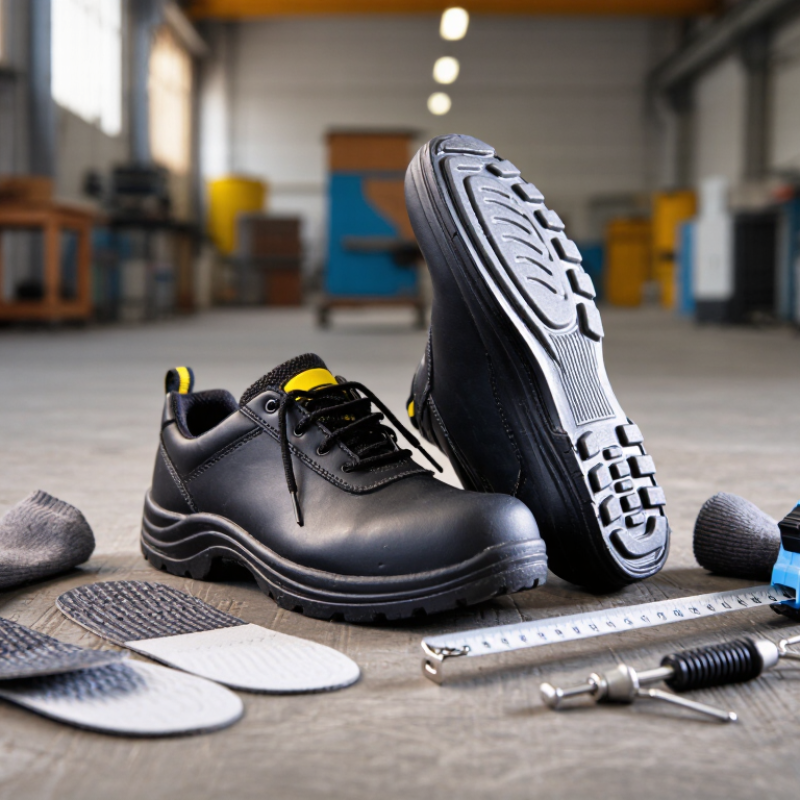
How to Fix Safety Shoes That Hurt Your Feet in 2026?

Assess Pain and Hazards Under OSHA 29 CFR 1910.136

Foot pain is not always a footwear problem. It may signal a poor hazard assessment. OSHA 29 CFR 1910.136 requires protective footwear where falling, rolling, sharp, hot, or electrical hazards could injure workers. The rule also recognizes ASTM F2412 and ASTM F2413 performance requirements. OSHA reports that workplace foot injuries affect more than 60,000 workers annually. That number makes discomfort worth investigating, not ignoring.

Check the pain location after a normal shift. Burning toes may indicate a narrow toe box. Heel rubbing often points to movement inside the shoe. Arch fatigue can reflect weak support or prolonged standing. Remove the insole and inspect compressed areas, cracked soles, exposed midsoles, and uneven wear. A practical check is simple: your toes should move, but your heel should not lift significantly during walking. Small detail. It matters.

Match the footwear to the actual hazard, not the job title. A warehouse worker may need impact and compression protection, while a maintenance worker may also face puncture or electrical risks. The Bureau of Labor Statistics reported 2.6 million nonfatal workplace injuries and illnesses in private industry during 2023, showing why prevention needs evidence. The Liberty Mutual Workplace Safety Index estimated serious workplace injuries cost employers $58.5 billion in 2022. Those reports do not prove every painful shoe causes an injury. My earlier assumption was too simple. Document the hazard, pain pattern, shift length, and footwear condition, then involve a competent safety professional before changing protection.

Measure Toe Clearance, Width, and Heel Fit Before Making Repairs

How to Fix Safety Shoes That Hurt Your Feet in 2026?

Measure before repairing. Your toes should not touch the front when standing or walking downhill. Leave roughly 10–15 millimeters of clearance beyond the longest toe. That space protects against bruising and pressure. The American Podiatric Medical Association’s national survey reported that 77% of adults had experienced foot pain. Poorly fitted work footwear can make ordinary discomfort worse. Stand on paper, trace both feet, and measure them late in the day. Feet often swell after several working hours.

Width needs equal attention. Measure across the widest forefoot, not only the shoe length. Your little toe should lie flat, without a folded edge or pale pressure mark. A repair shop may stretch leather slightly, but it cannot create safe structural space in a narrow toe box. Safety toe caps are rigid. They do not adapt like fabric. I once trusted a longer size to solve width problems. It failed. The heel slipped, and my toes still felt compressed.

Check heel fit by walking downstairs and squatting. Your heel should move only slightly, while the midfoot remains secure. OSHA’s foot-protection standard, 29 CFR 1910.136, requires protective footwear where falling or rolling objects create hazards. Comfort repairs must not weaken that protection. Replace damaged insoles only with compatible support, and avoid cutting the toe area. Recheck fit with work socks. A five-minute measurement can prevent weeks of painful adjustment.

How to Fix Safety Shoes That Hurt Your Feet in 2026? - Measure Toe Clearance, Width, and Heel Fit Before Making Repairs

Fit Dimension How to Measure Practical Target Common Warning Sign Possible Adjustment or Repair When to Stop Repairing
Toe Clearance Stand in the shoes with normal work socks. Measure the space between the longest toe and the inside front of the shoe. About 10–15 mm in front of the longest toe. Toes touch the protective toe cap, especially when walking downhill or climbing stairs. Remove bulky insoles, use thinner work socks, or try a longer safety-shoe size. Do not trim or reshape the protective toe cap. Replace the shoes if the toe cap presses against the toes or if the required clearance cannot be achieved.
Forefoot Width Stand naturally and check whether the widest part of the foot sits over the widest part of the shoe without side pressure. The foot should not bulge over the sole edge; toes should spread without overlap. Numbness, burning, blisters on the little toe, or pressure along the sides of the forefoot. Try a wider fitting, a different toe shape, or a lower-volume sock. A professional shoe stretcher may provide limited extra room in leather uppers. Replace the shoes if the protective structure limits width or if pain continues after short wear periods.
Toe Shape Compare the shoe’s internal toe shape with the natural outline of the foot while standing. The shoe should allow the toes to remain straight and move slightly without contact with the safety cap. Corns, curled toes, pressure on the big-toe joint, or repeated rubbing at one specific toe. Use a foot-shaped model, remove an excessively thick toe insert, or select a different toe-cap shape. Do not grind, cut, heat, or modify a certified protective toe cap.
Heel Fit Walk on a firm surface and check heel movement while the laces are comfortably tightened. Minimal lifting; the heel should remain seated without painful pressure. Heel slips repeatedly, blisters form, or the foot slides forward into the toe cap. Use a heel-lock lacing pattern, a correctly sized heel cup, or a thin supportive insole if it does not reduce toe clearance. Replace the shoes if the heel still lifts substantially or the foot slides forward during normal work.
Instep Volume Check pressure across the top of the foot after lacing. The tongue should lie flat without cutting into the instep. Laces should secure the foot without creating sharp pressure points or numbness. Red marks, tingling, swelling, or pain across the top of the foot. Adjust the lacing pattern, loosen the middle eyelets, or choose a higher-volume upper. Replace the shoes if the upper or protective closure creates persistent pressure.
Arch and Insole Support Stand and walk for several minutes with the supplied insole installed. Check whether the arch support contacts the foot comfortably. Support should feel stable, not sharp or concentrated in one small area. Arch pain, localized pressure, foot fatigue, or discomfort that improves when the insole is removed. Test a properly sized replacement insole with similar thickness. Recheck toe clearance after installation. Replace the shoes if a suitable insole cannot fit without crowding the foot or changing the safety fit.
Flex Point Observe where the shoe bends while walking. The bend should generally align with the ball of the foot. The forefoot should flex naturally without forcing the toes to grip. Pressure behind the toes, difficulty walking, or creasing directly over a toe joint. Try a different last or construction. Do not cut grooves into the outsole or upper. Replace the shoes if the flex point cannot align with the foot or if structural cutting would be required.
Outsole Wear and Traction Inspect the tread, heel edge, seams, and sole-to-upper bond before attempting comfort repairs. Tread should remain defined, securely attached, and free from deep cracks or separation. Uneven wear, slipping, exposed layers, cracks, or water entering through the sole. Use an approved cobbler for compatible sole repair when the protective construction remains intact. Replace the shoes if the sole is detached, badly cracked, punctured, or no longer provides reliable traction.
Protective Toe-Cap Condition Inspect the exterior and interior for dents, cracks, sharp edges, deformation, or signs of impact. The toe cap must remain undamaged and securely enclosed by the shoe structure. Visible deformation, cracking, exposed edges, or a previous heavy impact. Do not attempt to repair, reshape, drill, or heat the toe cap. Follow the manufacturer’s replacement guidance. Replace immediately after suspected protective-cap damage or a major impact.
Fit Test Duration Test both shoes near the end of the day, when feet are commonly more swollen, using the socks worn at work. Comfort should remain consistent during standing, walking, stair use, and normal work movements. Pain appears only after several hours or increases during the work shift. Recheck size, width, lacing, socks, and insole thickness before making permanent changes. Do not rely on a break-in period if there is numbness, sharp pain, circulation loss, or repeated skin injury.
Safety note: Comfort adjustments must not alter the protective toe cap, puncture-resistant layer, electrical protection, waterproof construction, or sole attachment. If pain, numbness, swelling, or skin damage continues, stop wearing the shoes and seek professional fitting or medical advice.

Match Protection to EN ISO 20345:2021: 200-J Impact and 15-kN Compression

How to Fix Safety Shoes That Hurt Your Feet in 2026?

Painful safety shoes often indicate a poor match, not weak feet. I once blamed the boot’s stiffness, but the toe cap was the real problem. Measure both feet late in the day, when swelling is greatest. Leave about 10–12 millimetres before the longest toe. Your heel should stay stable without pressure across the instep. Replace worn insoles, loosen the laces, and stop using shoes with compressed cushioning.

Protection still matters. EN ISO 20345:2021 requires tested safety footwear to resist a 200-joule impact and 15-kilonewton compression at the toe area. That protection can prevent severe crushing injuries, but it cannot correct a narrow fit. Select the required category for the workplace, then check width, flex point, slip resistance, and heat performance. A heavier toe cap may feel safer, yet unnecessary weight can increase fatigue during long shifts.

The UK Health and Safety Executive’s 2023/24 workplace statistics identify slips, trips, and falls as a major share of reported non-fatal injuries. Poor footwear fit can worsen balance and shorten walking comfort. That connection deserves more attention. Test new shoes on clean flooring before a full shift. Walk, squat, and climb stairs. Any rubbing, numbness, or toe contact is a warning, not a break-in challenge. Replace footwear when the sole loses grip or the protective structure shows damage.

Relieve Pressure with Lacing Changes and Certified Replacement Insoles

How to Fix Safety Shoes That Hurt Your Feet in 2026?

Safety shoes can hurt even when the size seems correct. Pressure often comes from poor lacing, worn insoles, or limited arch support. Small fit changes can make long shifts more manageable.

I once tightened every lace from the toe upward. It reduced heel movement, but the pressure moved onto my forefoot. That was not a real fix. A better method uses moderate tension across the toes and firmer support around the ankle. Skip one eyelet over a painful area. This creates space without making the shoe unstable. Keep both shoes adjusted equally, then walk for several minutes before starting work.

A certified replacement insole may help when the original foam has flattened. Choose one approved for the shoe’s safety design, especially if the footwear uses electrical, puncture, or slip-resistant protection. A thick casual insert can reduce internal space and change your footing. Check the footwear documentation, insole markings, and fit carefully. If possible, ask a qualified podiatrist or safety-footwear specialist to assess your arch, heel, and walking pattern. Feet should feel supported, not squeezed. Remove the insole after a shift and inspect damp spots, uneven wear, or red pressure marks. Red marks that remain after rest deserve attention. I still find fit testing imperfect; feet swell during hot shifts, and a comfortable morning fit may fail by afternoon. Adjust gradually, and replace damaged components rather than forcing a painful pair to work.

Retire Shoes When ASTM F2413 Protection or Sole Traction Fails

How to Fix Safety Shoes That Hurt Your Feet in 2026?

Painful safety shoes may need adjustment, not immediate disposal. Check the fit after a full work shift, when feet are slightly swollen. Your toes should move freely without touching the protective toe cap. Laces should hold the heel firmly, but they should not create pressure points. Thin moisture-wicking socks can reduce rubbing. A removable insole may improve arch support, but it must not reduce internal space.

Protection comes before comfort. ASTM F2413-rated footwear is designed to meet specific impact and compression requirements. Inspect the toe area for cracks, dents, looseness, or unusual movement. Check for exposed protective plates, separated stitching, and crushed internal padding. A visual inspection cannot confirm every hidden defect. That limitation matters. If the protective structure may no longer perform, retire the shoes rather than guessing.

Traction also decides when shoes must leave service. Look at the outsole under bright light. Deep cuts, missing rubber, smooth patches, or hard, brittle material can increase slipping risk. Test the sole on a clean, dry floor, but do not treat one successful step as proof of safety. Wet surfaces reveal weaknesses quickly. I once kept a pair because the upper looked fine; the worn tread was the real problem. Replace footwear when ASTM F2413 protection or sole traction fails, even if the shoes still feel comfortable. Pain can improve. Failed protection cannot.

How to Fix Safety Shoes That Hurt Your Feet in 2026?

Retire Shoes When ASTM F2413 Protection or Sole Traction Fails

ASTM F2413 safety-toe footwear uses a minimum impact resistance of 75 foot-pounds and a minimum compression resistance of 2,500 pounds for applicable protective-toe classifications. These are laboratory performance thresholds, not service-life limits. Replace safety shoes when the protective toe area is damaged, the sole loses reliable traction, or cracks, separation, and heavy wear make the footwear unsafe.

FAQS

What can foot pain reveal about workplace safety?

Pain may signal poor hazard assessment, not only uncomfortable footwear. Burning toes suggest a narrow toe box. Heel rubbing suggests internal movement. Treat discomfort as evidence worth investigating.

How much space should safety footwear leave at the toes?

Leave about 10–15 millimeters beyond the longest toe. Your toes should not touch the front while walking downhill. Measure both feet late in the day. Feet may swell after long work hours.

How can I check whether the footwear is too narrow?

Measure across the widest forefoot, not just the shoe length. Your little toe should lie flat. Watch for pale pressure marks or folded skin. A longer size may not solve a width problem.

How should the heel fit during movement?

The heel should move only slightly while walking, squatting, or descending stairs. The midfoot should remain secure. Too much lifting can cause rubbing and instability. Small movement is acceptable.

Can safety footwear be stretched to fix tightness?

A repair shop may stretch some materials slightly. It cannot create safe space inside a rigid toe cap. Do not cut the toe area. That could weaken protection.

What workplace hazards should determine footwear selection?

Match footwear to actual hazards, not job titles. Falling or rolling objects require impact and compression protection. Sharp surfaces may require puncture resistance. Electrical, heat, and slipping risks may need additional protection.

What protection levels are commonly discussed for safety footwear?

Some safety requirements test toe areas against 200-joule impact and 15-kilonewton compression. These tests address crushing risks. They do not fix poor fit. Protection and comfort must work together.

When should damaged safety footwear be replaced?

Replace footwear when soles lose grip or protective structures show damage. Inspect compressed insoles, cracked soles, exposed midsoles, and uneven wear. Replace insoles only with compatible support. I once assumed worn cushioning was harmless. It was not.

What should I do before wearing repaired or new safety footwear for a full shift?

Test it on clean flooring first. Walk, squat, climb stairs, and wear normal work socks. Stop if you feel rubbing, numbness, or toe contact. A five-minute check can prevent weeks of painful adjustment.

Conclusion

If you are wondering, “why do my safety shoes hurt my feet,” start by identifying the source of the discomfort and any workplace hazards. Check whether your toes have enough clearance, the shoe width matches your foot, and your heel stays secure without rubbing. Do not ignore pressure, numbness, blisters, or unstable footing, especially when your work requires impact, compression, or slip protection under OSHA 29 CFR 1910.136.

Comfort may improve through different lacing patterns, appropriate socks, and certified replacement insoles that do not reduce the shoe’s protective performance. Confirm that the footwear still meets the required protection level, such as EN ISO 20345:2021 ratings for 200-joule impact and 15-kilonewton compression, or applicable ASTM F2413 requirements. Replace the shoes when the protective toe area, sole traction, structure, or fit has deteriorated. Proper sizing and timely replacement are safer than forcing painful footwear to continue.

Madeline

Madeline

Madeline is a dedicated marketing professional with a wealth of expertise in our company's core offerings. With a keen understanding of the industry, she brings a unique perspective to her role, consistently delivering high-quality content that highlights the superior aspects of our products. As......