Choosing protective work boots can feel simple until you compare a heavy steel cap with a lighter composite design. The real question is not only “what is the difference between steel toe and composite toe,” but also which protection suits your workplace, weather, and daily movement. A warehouse worker may value impact resistance and durability. An electrician may prefer nonmetallic protection near electrical hazards. Neither choice wins automatically.
Dr. Nicholas Campitelli, a podiatrist who discusses footwear and occupational foot health, offers a useful principle: “The best work boot is the one that protects your feet without changing how you move.” Comfort matters because sore feet can affect balance, concentration, and safe lifting. Steel toes usually provide strong impact and compression protection. They can also feel colder in winter and heavier after a long shift. Composite toes often weigh less and do not conduct cold or heat as quickly. However, they may require more space inside the boot.
Small details matter. Check the toe box. Walk on concrete. Bend your toes. Notice pressure near the little toe. A boot can meet a safety standard and still fit poorly. That is easy to overlook.
This guide compares steel and composite toe boots through protection, weight, insulation, durability, fit, and workplace demands. It also considers user experience, not just product labels. My own first impression would favor composite for comfort, yet that judgment needs testing. A harsh construction site may expose weaknesses that a clean warehouse never reveals. The safest decision combines certified protection, honest fit, and the actual conditions surrounding your feet every day.
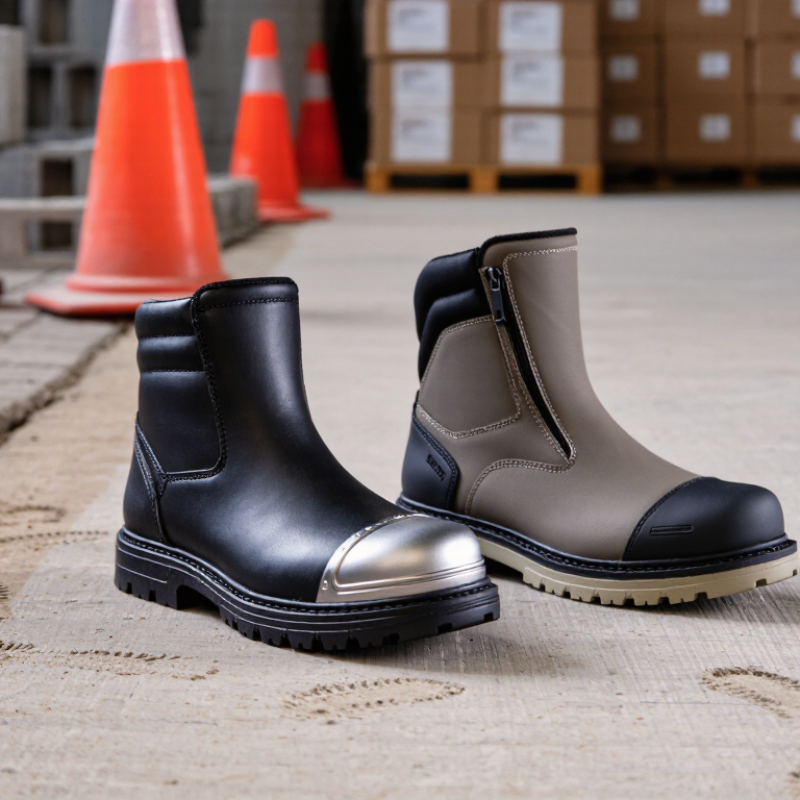
How to Choose Between Steel Toe and Composite Toe Boots?
Understanding the toe-cap construction matters more than appearance. Steel toe boots use a shaped steel cap to resist impact and compression. Composite toe boots use nonmetallic materials, such as reinforced polymers or carbon-based structures. They are often lighter and do not conduct heat or cold as quickly as steel. However, warmth and electrical protection depend on the complete boot design, not the toe cap alone.
ASTM F2413 establishes performance requirements for protective footwear, including impact and compression resistance. ASTM F2412 describes the testing methods used to evaluate that protection. OSHA 1910.136 also requires employers to provide suitable foot protection when falling or rolling objects create injury risks. In practical terms, steel suits heavy warehouse work, fabrication areas, and sites with frequent material handling. Composite construction may feel better during long walks, winter inspections, or jobs involving security screening.
Bureau of Labor Statistics data recorded about 2.6 million nonfatal workplace injuries and illnesses in private industry during 2023. That figure does not identify toe-cap failures, but it shows why hazard assessment matters. Check the certification label, toe-room, sole grip, and fit before choosing. Try boots near the end of the workday, when feet are slightly larger. A poor fit can create pressure, blisters, and slower movement. I would not treat lighter weight as automatic proof of better protection. That assumption needs questioning. Test the boot against the actual floor, climate, and objects handled daily.
| Comparison Dimension | Steel Toe Construction | Composite Toe Construction | Practical Buying Consideration |
|---|---|---|---|
| Toe-cap material | A formed steel cap is placed inside the front of the boot to help protect the toes from impact and compression. | A non-metallic cap is commonly made from materials such as fiberglass-reinforced plastic, carbon fiber, or reinforced polymer. | Both types can provide certified protection when the finished boot meets the applicable safety standard. |
| Impact and compression protection | Designed to resist impact and compression hazards when tested and labeled under the required standard. | Also designed to resist impact and compression hazards when tested and labeled under the required standard. | Check the safety markings and certification rather than choosing only by toe-cap material. |
| Typical weight | Generally heavier than comparable composite-toe designs because steel is dense. | Generally lighter than comparable steel-toe designs, although the final weight depends on size, outsole, insulation, and construction. | Composite toe may be preferable for walking-intensive jobs or long shifts. |
| Cold-weather performance | Steel can conduct heat away from the foot more readily, which may make the toe area feel colder in low temperatures. | Non-metallic materials usually transfer less heat than steel, so they may feel warmer in cold conditions. | Insulation, socks, boot fit, and moisture control also strongly affect warmth. |
| Heat transfer | Steel transfers heat efficiently and may become uncomfortable in very hot or cold environments if the boot is not properly insulated. | Composite materials generally have lower thermal conductivity than steel. | For extreme temperatures, review the boot’s complete heat, insulation, and workplace ratings. |
| Electrical hazard considerations | The steel cap itself is conductive. A steel-toe boot may still carry an electrical-hazard rating only if the complete boot is specifically tested and labeled for that purpose. | Non-metallic toe material is not electrically conductive, but the complete boot must still have the appropriate electrical protection rating. | Do not assume that a composite toe automatically provides electrical protection; verify the marked rating. |
| Metal-detector environments | More likely to trigger metal-detection systems because the toe cap contains steel. | Less likely to trigger metal detectors because the toe cap is non-metallic, although other boot components may contain metal. | Composite toe is often more convenient for airports, secure facilities, and controlled-access workplaces. |
| Available toe shape and fit | Available in multiple shapes, but the internal steel cap can feel less flexible in some designs. | Available in multiple shapes and may allow more design flexibility, depending on the manufacturer and boot model. | Prioritize adequate toe room, heel security, and the absence of pressure points over the material alone. |
| Durability considerations | Steel is a strong, rigid material, but the boot can still fail from worn stitching, damaged soles, corrosion, or other construction problems. | Composite caps do not rust, but they can still be damaged by severe wear, crushing, chemicals, or aging of the surrounding boot. | Inspect the entire boot regularly; toe material alone does not determine service life. |
| Common work environments | Construction, manufacturing, warehousing, utilities, and other jobs with substantial impact or compression risks. | Construction, light industrial work, logistics, outdoor work, security-controlled sites, and environments where low weight or thermal comfort matters. | Match the boot to the actual hazards, temperature, walking distance, and site rules. |
| Safety standards | Models may be tested to standards such as ASTM F2413 in the United States or CSA Z195 in Canada, depending on the product and market. | Models may be tested to the same applicable standards; certification depends on the complete boot, not simply the use of composite material. | Look for current certification markings and confirm that they cover the hazards present at your workplace. |
| Best choice when... | You value a traditional rigid toe cap and do not expect frequent metal-detector screening or extreme cold exposure. | You want a lighter, non-metallic option or work in conditions where reduced heat transfer and detector compatibility are useful. | The best option is the one that satisfies workplace requirements while providing a secure, comfortable fit. |
Steel toe boots use a shaped steel cap for impact and compression resistance. Composite boots use nonmetallic materials. Composite designs often feel lighter.
Steel may suit repeated impacts from tools, stock, or falling materials. It usually offers a slimmer toe profile. The complete safety rating still matters.
Composite materials usually transfer less heat than steel. This can help on winter loading docks. Insulation depends on the entire boot.
No toe material guarantees electrical safety. Check the boot’s tested electrical rating and sole construction. Wetness and damage can reduce protection.
Try them near the end of your workday. Wear your usual work socks. Walk stairs, bend your ankles, and check heel movement.
No. Weight alone proves very little. Compare verified ratings with the actual floor, climate, and objects handled daily.
Check traction, puncture resistance, stitching, moisture resistance, and sole durability. On wet concrete, grip may matter more than toe material. Small details matter.
Compare its safety rating, warranty, sole quality, and replaceable insoles. A low price fails if the sole separates quickly. I once ignored arch support and regretted it.
Choosing the right safety boots begins with understanding construction and job demands. The key question, “what is the difference between steel toe and composite toe,” relates to their materials and performance. Steel toe caps are typically highly resistant to heavy impact and compression, while composite toe caps use non-metal materials that can feel lighter and may be more comfortable in environments with metal detectors or electrical concerns. Composite materials may also provide better insulation in very hot or cold conditions, although actual performance depends on the boot’s overall design.
When comparing options, consider the hazards, temperature, electrical exposure, required safety ratings, and daily comfort needs of your workplace. Steel toe boots may suit jobs involving heavy machinery or falling objects, while composite toe boots can be practical for workers who value reduced weight or work around temperature extremes. Fit is equally important: look for secure heel support, enough toe room, durable construction, and comfortable cushioning. Finally, balance protection, expected lifespan, and budget rather than choosing based on price alone.

 Lento Shoe