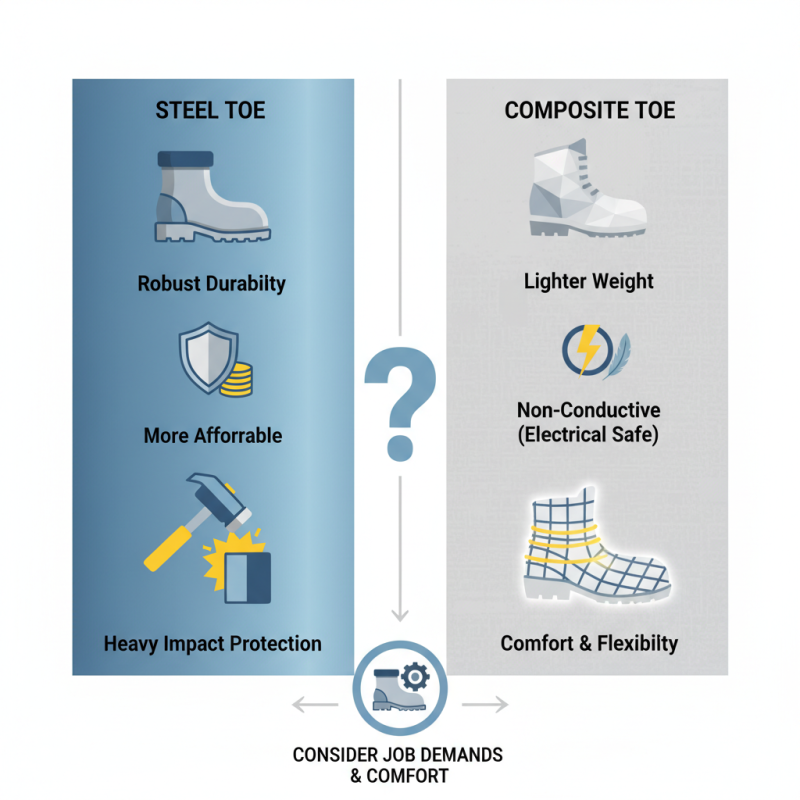
When choosing safety footwear, many people wonder what is the difference between steel toe and composite toe options. Both types offer protection, but they have unique characteristics. Steel toe boots contain a reinforced steel cap that protects your toes from heavy impacts and compressions. They are often more affordable and provide robust durability in harsh environments.
On the other hand, composite toe boots are made from materials like Kevlar or fiberglass. They are lighter and do not conduct electricity, making them a safer choice in certain workplaces. However, they may not be as protective in extreme conditions as steel toe boots. It is crucial to consider your job demands and environment when selecting the right pair.
Perhaps you've experienced discomfort in previous footwear. This is common when the fit is wrong, or the material doesn’t breathe well. Reflecting on these details can influence your decision. Both steel toe and composite toe options have their advantages and drawbacks. Understanding these differences will help you make an informed choice for your safety and comfort.
Steel Toe vs Composite Toe: Understanding the Key Differences
When choosing between
steel toe
and
composite toe shoes, understanding the key differences is crucial.
Steel toe shoes are made with a steel cap that protects the toes from heavy impacts. They are known for their
durability and excellent protection in hazardous environments. However, they can be heavier and may conduct
electricity, which is a consideration for those working in certain fields.
On the other hand,
composite toe shoes use materials like
Kevlar or
carbon fiber. These materials keep the shoes lightweight. They don’t conduct
electricity, making them safer for electrical work. But, some users may find them less protective than
steel toe options.
Tips: Consider your work environment when making a choice. If you work around heavy machinery,
steel toes may be best. If you prioritize
comfort and
weight, composite toes could be ideal. Remember to try both types on to assess fit and feel.
It’s also essential to reflect on your daily activities. If you’re on your feet a lot, the weight of the shoe matters.
Sweet spots in protection can vary based on your industry. Regularly review your footwear choices to ensure they meet
changing safety needs.
Safety Ratings: ANSI Standards for Steel and Composite Toe Protection
When considering safety footwear, the ANSI standards play a crucial role. These standards classify both steel and composite toe protection. According to ANSI Z41, steel toe caps must withstand up to 2,500 pounds of impact. This offers substantial protection against heavy objects. However, they can be heavy and colder in extreme weather.
Composite toe boots meet the same impact standards but are made from materials like Kevlar or carbon fiber. They weigh less, providing comfort for extended wear. They also offer better insulation from cold. Yet, they may not provide the same level of durability in harsh environments. Reports indicate that many workers prefer composite options for daily use, citing comfort as a significant factor.
Choosing between these types hinges on the specific work environment. In construction or heavy-duty applications, steel toes are often preferred. In contrast, composite options might be better for jobs requiring prolonged standing and flexibility. Always assess your workplace risks before making a decision. While both options meet ANSI safety ratings, the best choice varies by individual needs.
Weight and Comfort: A Comparative Analysis of Both Toe Types
When deciding between steel toe and composite toe footwear, weight and comfort play crucial roles. Steel toe boots are known for their strength and durability. However, they tend to be heavier. This extra weight can cause fatigue during long hours on the job. On the other hand, composite toe boots are typically lighter. They provide a similar level of protection without the added bulk.
Comfort often depends on individual preferences. Some may find the stiffer steel toe more secure. Others may prefer the flexibility of composite materials. It’s essential to try both types. Walk around and assess how they feel. A boot that fits well enhances your performance and reduces the risk of injury.
Tips: Always check the weight before purchasing. Lightweight footwear can keep you energized. Pay attention to your feet’s response during long use. Don't hesitate to ask colleagues for their experiences. Their insights can guide your decision and help you avoid common pitfalls.
2026 Best Steel Toe vs Composite Toe: Weight and Comfort Comparison
Durability and Impact Resistance: An Industry Perspective
When comparing steel toe and composite toe footwear, durability and impact resistance emerge as key factors. According to a report by the American Society for Testing and Materials (ASTM), steel toe boots often withstand greater force, able to handle impacts of up to 75 joules. This makes them a popular choice in high-risk industries such as construction and manufacturing.
Conversely, composite toe boots made from materials like Kevlar or carbon fiber offer significant advantages. They are lighter, non-conductive, and do not conduct heat or cold. However, they typically provide lower impact resistance, usually rated around 50 joules. A study from the National Safety Council indicates that the choice between these options often comes down to the work environment. In settings with electrical hazards, composite boots are preferable, despite their lower durability.
Interestingly, while many workers prefer steel toe options for their robustness, they may overlook the comfort and flexibility of composite models. Reports suggest that extended wear can lead to discomfort in steel toed footwear, especially in varied weather conditions. This trade-off between immediate protection and long-term wearability requires careful consideration by those in demanding professions.
Cost-Effectiveness: Evaluating Long-Term Investment in Foot Protection
When considering foot protection, the choice between steel toe and composite toe footwear hinges on cost-effectiveness and long-term investment. Steel toe boots often come with a higher initial price, averaging around $150 to $200. However, they provide robust protection against heavy impacts. According to a report from the Bureau of Labor Statistics, injuries related to foot hazards cost industries billions annually. Investing in proper footwear can significantly reduce these costs over time.
Composite toe boots, while typically lighter and more comfortable, present a varying price range of $100 to $180. They are less conductive and can withstand temperature extremes better than steel toes. A study from the National Safety Council indicates that while initial costs may be lower, the long-term benefits, such as reduced fatigue and increased productivity, can be substantial. Wearers often note improved comfort levels leading to fewer injuries caused by extended hours on the job.
Durability is a crucial factor to weigh. Steel toes may last longer in rugged environments, yet they can be prone to rust and corrosion. Composite toes, on the other hand, might wear out faster but offer better thermal insulation. Reflecting on these trade-offs is vital. Choosing the best option must consider specific work conditions and the safety requirements pertinent to the industry. A comprehensive assessment will lead to smarter investments in personal protective equipment.
2026 Best Steel Toe vs Composite Toe Which is Better? - Cost-Effectiveness: Evaluating Long-Term Investment in Foot Protection
| Characteristics |
Steel Toe |
Composite Toe |
| Weight |
Heavier |
Lighter |
| Heat Resistance |
Good |
Excellent |
| Electrical Conductivity |
Conductive |
Non-conductive |
| Price Range |
$100 - $200 |
$80 - $150 |
| Durability |
Very Durable |
Moderately Durable |
| Comfort |
Moderate |
High |
| Usage in Cold Environments |
Not Ideal |
Ideal |
| Overall Long-Term Investment |
Higher Cost, Longer Lifespan |
Lower Cost, Moderate Lifespan |
Conclusion
In the ongoing debate of "what is the difference between steel toe and composite toe" footwear, understanding the key characteristics of each option is crucial for making an informed decision. Steel toes are well-regarded for their superior durability and impact resistance, compliant with ANSI safety standards. However, their weight can be a drawback in terms of comfort, especially for long hours of wear. In contrast, composite toes offer a lighter alternative that also meets safety ratings but may sacrifice some durability under extreme conditions.
Additionally, evaluating the long-term investment between these two types emphasizes the cost-effectiveness of composite options, which often resist electrical hazards and temperature extremes better than steel. Ultimately, the choice hinges on the specific needs of the wearer, weighing factors such as comfort, protection level, and investment longevity.

 Lento Shoe